

Precision Engineering, Wet & Dry Ball Milling Dynamics, and Enterprise Powder Metallurgy Solutions Delivering Japanese Standard Metallurgy with China Industry 4.0 Scale.
Manufactured under ISO 9001 and ISO 14001 compliance, our ball-milled, atomized, and composite powders cater to additive manufacturing, thermal interfaces, and MIM components.







How the shift from conventional mechanical comminution to cryogenic, high-energy ball milling (HEBM) and inert gas milling is transforming advanced materials fabrication.
Modern ball milling operates beyond simple size reduction. Using planetary and attritor ball mills under strictly controlled atmospheres (argon or nitrogen), OEM ball mill aluminum powder exporters introduce mechanical alloying. This disperses sub-micron ceramic particles (such as SiC, Al₂O₃, and TiB₂) uniformly into aluminum lattices, producing ODS (Oxide Dispersion Strengthened) matrices capable of enduring extreme thermal thresholds.
Ball milling kinetics dictate morphology. Through tailored Process Control Agents (PCAs) such as stearic acid, ethanol, or oleic acid, our milling lines govern cold welding and fracturing equilibrium. This enables custom production runs ranging from ultra-thin leafing/non-leafing aluminum pigment flakes (aspect ratio > 200:1) to nodular, pseudo-spherical particles engineered for dense press-and-sinter powder metallurgy.
Sub-micron and micro-scale ball-milled aluminum powder exhibits extreme reactivity. Toyal JWX integrates proprietary in-situ controlled passivation loops during the discharge phase. By managing active oxide growth within a deterministic 2–4 nm layer, we guarantee pyrophoric stability, safe international ocean transport, and chemical predictability during secondary sintering or thermal resin compounding.
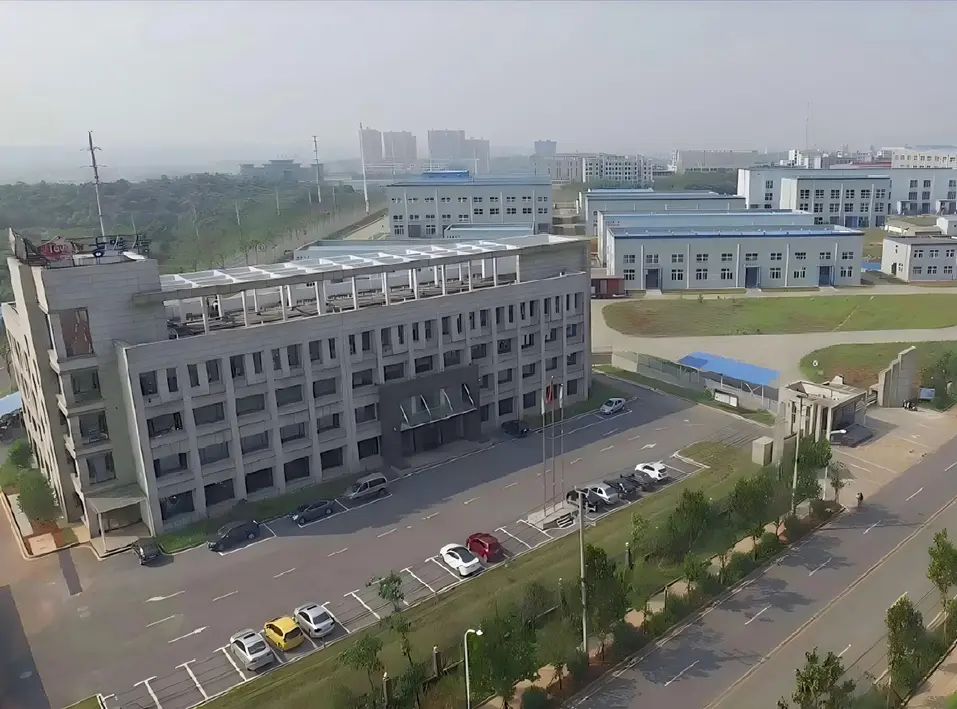
Hunan Ningxiang JiWeiXin Metal Powder Co., Ltd. (Toyal JWX) represents a rare industrial synergy in metallurgy. Founded in 1997 and jointly acquired in 2009 by Toyo Aluminium K.K. Group and Shanghai Matsuo Co., Ltd., the enterprise couples rigid Japanese manufacturing principles with China's rapid industrial iteration speed.
Procurement directors and metallurgists in North America, Western Europe, and Japan face escalating supply chain constraints. Here is how Toyal JWX addresses the modern OEM procurement matrix.
Aerospace and additive sectors cannot tolerate standard bell-curve powder profiles. OEM buyers mandate hyper-targeted spans where (D90-D10)/D50 < 1.1. Our custom air-classification loops eliminate ultrafine satellites (<5µm) to stop nozzle clogs in 3D printing and eradicate oversized granules that impair MIM sintering shrinkage.
Exporting micro-milled aluminum powder demands flawless regulatory rigor. As a Class 4.3 (Water-Reactive, UN1396) or Class 4.1 (Flammable Solid, UN1309) material, powders must ship in nitrogen-purged steel drums with UN certification. Toyal JWX provides pre-cleared dangerous goods export manifests for rapid customs clearance across global hubs.
With geopolitical volatility and domestic metal price spreads fluctuating, Western tier-1 OEMs require reliable Chinese high-capacity production paired with multinational audit standards. Toyal JWX eliminates the risk of working with non-accredited facilities by maintaining strict Japanese-managed quality controls.
Every shipment is delivered alongside a full Certificate of Analysis (COA) containing ICP-OES elemental analysis, Hall flow rates, tap density, moisture levels (Karl Fischer titration), and gas pycnometry data to satisfy ISO/TS compliance audits.
Precision-milled aluminum powder serves as the catalyst and structural foundation for premier advanced materials applications worldwide.
High-density electronic architectures and electric vehicle battery packs generate concentrated thermal loads. By compounding coated spherical aluminum powders with silicone and epoxy matrices, engineers achieve elevated thermal conductivity (> 5 W/m·K) while preserving structural dielectric integrity and paste rheology.
AMMCs rely on ball-milled aluminum matrix powder blended with ultra-hard ceramic particles (silicon carbide or boron carbide). This powder metallurgy process delivers finished brake calipers, lightweight structural ribs, and drone frames offering high specific stiffness and low thermal expansion (CTE).
Our tailored Al-Si eutectic alloy powders (such as AlSi12) melt sharply at controlled intervals to braze aluminum heat exchangers, HVAC radiators, and complex aerospace manifolds without melting delicate base substrates.
Comprehensive engineering clarifications addressing the most common qualification concerns from global buyers.
Gas atomization relies on supersonic inert gas jets breaking up molten metal streams into spherical droplets, maximizing bulk flowability and tap density for additive manufacturing. Ball milling, conversely, is a solid-state mechanical process that produces flakes, lamellar, or irregular nodular particles. Ball milling is ideal for mechanical alloying, flakes for barrier pigments, and mechanical bonding applications where high surface-area-to-volume ratio or particle interlocking is preferred.
Yes. Our automated multi-stage air classification units allow us to sculpt cut-off margins precisely. We can adjust the D10, D50, and D90 parameters, remove ultrafines below 5 microns to curb dusting and oxidation risks, and truncate large coarse tails over 45 microns to suit metal injection molding (MIM) feedstocks and high-loading thermal pastes.
Hunan Ningxiang JiWeiXin operates under the stringent Japanese quality and process management standards inherited from Toyo Aluminium K.K. Group since 2009. We offer the high-volume capacity, competitive scaling, and supply agility of China’s national-level manufacturing zones, validated by ISO 9001, ISO 14001, and internationally audited Dangerous Goods handling workflows.
Micro-fine aluminum powders are combustible and water-reactive, classified internationally under UN1396 (Class 4.3, Dangerous When Wet) or UN1309 (Class 4.1, Flammable Solid). We supply complete IMO-compliant packaging: vacuum-sealed nitrogen-flushed inner foil liners enclosed in steel drums with tamper-proof sealing rings, backed by verified MSDS, COA, and third-party UN test documentation.
Yes. We apply diverse organic and inorganic surface modifications—including stearic acid coatings, silane coupling agents, and titanate treatments—during or post-milling. These treatments optimize resin dispersion, extend oxidative shelf life, and mitigate premature reactions in aqueous or high-humidity environments.
Select your required formulation below to initiate batch testing, spec-sheet evaluation, and logistics coordination with our metallurgical engineering team.

