

Toyo Aluminium K.K. Group Quality Heritage

High-Quality Aluminium Powder Metallurgy Manufacturer & Factory

Global benchmark in precision inert gas atomization, spherical aluminium alloys, and customized micro-engineered powders for Additive Manufacturing, MIM, and Advanced Powder Metallurgy since 1997.

Primary Powder Metallurgy & Alloy Feedstocks

Engineered with high sphericity (≥95%), tightly classified PSD, and sub-100 ppm interstitial oxygen controls to meet strict metallurgical and manufacturing specifications.


ODM Uncoated Aluminum powder for Aluminum metal matrix composite
ODM Uncoated Aluminum powder for Aluminum metal matrix composite Manufacturer, Manufacturers
View Specifications
10,000t

Annual Powder Output

28+yrs

Atomization Engineering

230+

Global Tier-1 Partners

99.99%

High-Purity Available

Global Industrial Landscape & Commercial Realities

The global aluminium powder metallurgy (PM) market has evolved from commodity pressing applications into an advanced materials science discipline. Driven by rigorous net-zero emissions mandates, lightweighting engineering across electric vehicles (EV), and aerospace structural demands, aluminium PM represents one of the fastest-growing metallurgical segments.

As the international industrial community transitions from traditional casting and subtractive machining to precision net-shape processing—such as Metal Injection Molding (MIM), Additive Manufacturing (LPBF, DED), and high-density press-and-sinter—the demand for powder with strict morphology, tight particle size distribution (PSD), and minimal oxide skin thicknesses has surged.
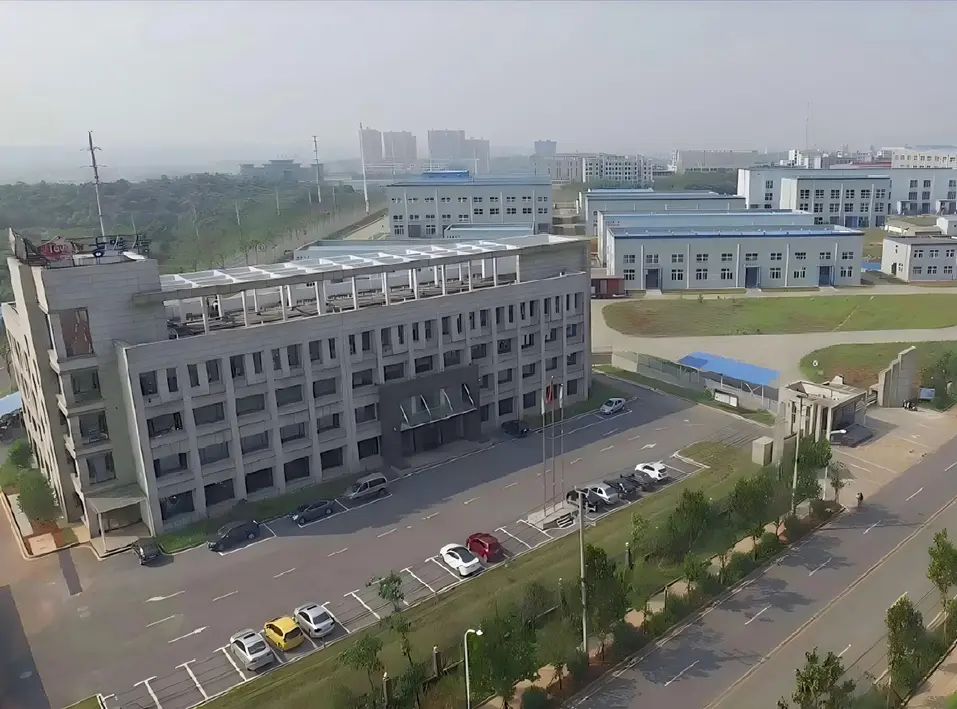
  • Oxide Layer Engineering: In-situ atmospheric regulation ensuring passivation layers remain under 5 nm for optimal sintering neck formation.
  • Spherical Sphericity Control: High-pressure nitrogen atomization achieving over 95% sphericity to maximize tap density and powder rheology.
  • Closed-Loop Supply Stability: Fully integrated manufacturing in Ningxiang National ETDZ under Toyo Aluminium K.K. operating protocols.
Toyal JWX state of the art aluminium powder metallurgy factory

Future Metallurgy Trends & Technological Roadmap

Mapping the transition from standard casting alloy chemistry to advanced high-entropy, nano-reinforced, and thermal dissipation systems for next-generation manufacturing.

Next-Gen High-Temperature Aluminium

Overcoming the conventional 150°C thermal limit of standard aluminium alloys. We are advancing transition-metal alloying (Fe, Ni, Cr, Zr) to form stable intermetallic dispersoids that retain structural yield strength beyond 300°C, providing lightweight replacements for titanium in aerospace ducts and engine housings.

Additive-Specific Crack Resistance

Traditional 2xxx, 6xxx, and 7xxx wrought alloys suffer severe hot cracking during laser powder bed fusion (LPBF). Our metallurgical roadmap leverages in-situ grain refiners (such as sub-micron titanium diboride and zirconium inoculants) that eliminate dendritic columnar growth, achieving equiaxed microstructure with full density.

Continuous Ultra-Fine Classification

By integrating multi-stage cyclone aerodynamic classifiers, we are pushing particle cut-offs down to narrow envelopes: 0–20 μm for ultra-dense MIM binder loadings, 15–53 μm for high-speed additive systems, and 45–105 μm for Cold Spray Additive Manufacturing (CSAM).

Localized End-Use Application Engineering

From EV powertrain enclosures to semiconductor heat sinks, examine how our specialized powders perform across key commercial manufacturing routes.

Automotive & Electric Mobility

Aluminium powder metallurgy components such as variable valve timing (VVT) pulleys, oil pump gears, and structural brackets replace heavier iron components, cutting rotating mass by up to 50% while lowering parasitic drivetrain friction.

Thermal Management & TIMs

Fabricated and coated aluminium powders are loaded into silicone elastomers, epoxy resins, and polyurethanes. The spherical shape enables packaging loading above 70 vol% with low viscosity, ensuring thermal conductivity for EV battery cell gap fillers.

Al-MMCs (Metal Matrix Composites)

Reinforcing clean aluminium powder with fine silicon carbide (SiC), boron carbide (B4C), or aluminium oxide ceramics creates composites tailored for brake rotors, aerospace optical benches, and nuclear shielding structures.

Brazing & High-Precision Joining

Formulated Al-Si eutectic and near-eutectic powders (AlSi12) are formulated into non-corrosive flux brazing pastes, delivering controlled capillary flow during controlled atmosphere brazing (CAB) of automotive heat exchangers and condensers.

Comprehensive Engineering Quality System

Under Toyo Aluminium K.K. quality governance, our plant combines Japanese statistical process control with clean manufacturing standards.

Inert Gas Atomization Facility

Multi-nozzle gas atomization towers running high-purity nitrogen or argon prevent internal gas porosity, minimize satellite particles, and yield a clean spherical powder geometry across production campaigns.

Certified Traceability & Systems

Certified under ISO 9001:2015 and ISO 14001:2015 with Safe Production Licensure. Every batch undergoes ICP elemental assays, laser diffraction PSD validation (Malvern Mastersizer), and Hall flow rate verification.

Dangerous-Goods Logistics Compliance

Specialized export compliance handling UN1396 (Class 4.3 Water-reactive) and UN1309 (Class 4.1 Flammable solid) powders. Packed in argon-purged, hermetically sealed steel drums to ensure shelf-life upon global delivery.

Technical & Commercial FAQ

Key technical considerations for procurement managers, powder metallurgists, and production engineers.

Can Toyal JWX customize the particle size distribution (PSD) for specialized PM or additive systems?
Yes. Particle size distribution, alloy composition, and surface treatment can be engineered to your process, whether laser powder bed fusion (LPBF), metal injection molding (MIM), press-and-sinter powder metallurgy, thermal fillers, or pigment milling. By controlling inert gas pressure, melt temperature, and fine-tuning aerodynamic classifier cut-points, we can deliver narrow distributions (e.g., D10=18μm, D50=32μm, D90=48μm) with low fines content.
What is the difference between spherical and coated aluminium powder?
Spherical uncoated powder offers high flowability and tap packing density for 3D printing, press-and-sinter PM, and aluminium metal matrix composites (AMMC). Coated or surface-treated aluminium powder adds a functional chemical layer (such as silane couplings, fatty acids, or tailored polymers) that improves compatibility with organic matrices (silicone, epoxy), reduces compound viscosity at high loading, and provides moisture protection for thermal filler applications.
How does the oxide content in aluminium powder affect sintering kinetics in powder metallurgy?
Aluminium inherently forms a stable amorphous alumina (Al2O3) passivation film upon exposure to oxygen. In PM sintering, this oxide film acts as a diffusion barrier, impeding metallic neck development between particles. Our vacuum-melted and inert-gas atomized manufacturing limits oxygen pickup during production. Additionally, adding trace liquid-phase formers (such as Mg, Cu, or Sn) allows the matrix to chemically reduce or disrupt the oxide skin at sintering temperatures, achieving relative densities exceeding 98%.
How is aluminium powder shipped internationally according to dangerous goods regulations?
Aluminium powder is a regulated dangerous good. Uncoated aluminium powder is typically classified as UN1396 (Hazard Class 4.3: Substances which in contact with water emit flammable gases) and coated aluminium powder as UN1309 (Hazard Class 4.1: Flammable solid). We package materials in UN-certified steel drums with internal hermetic poly-liners, blanketed with dry nitrogen, accompanied by batch Certificates of Analysis (COA) and complete Safety Data Sheets (SDS) conforming to GHS standards.
Which quality certifications does the factory hold and what is your connection to Toyo Aluminium?
Founded in 1997, Hunan Ningxiang JiWeiXin Metal Powder Co., Ltd. was jointly acquired in December 2009 by Toyo Aluminium K.K. Group and Shanghai Matsuo Co., Ltd. We operate under Toyo Aluminium K.K. quality controls and are certified to ISO 9001:2015 (Quality Management System) and ISO 14001:2015 (Environmental Management System), along with holding official Provincial Safe Production Licensure for metal powder manufacturing.

Advanced Engineering Powders & Matrix Grades

Select grades for high-performance sintering, thermal pads, structural matrix composites, and precision surface coatings.

ODM Uncoated Aluminum powder for Aluminum metal matrix composite
ODM Uncoated Aluminum powder for Aluminum metal matrix composite Manufacturer, Manufacturers
View Specifications

Consult Our Powder Metallurgists

Whether qualifying custom particle cut-points (D10/D50/D90), assessing new chemical additions, or optimizing sintering kinetics for volume production, our engineering staff provides detailed technical support.

Request Technical Consultation & Samples





