High-purity atomized spherical aluminium, proprietary alloy matrices, and functional surface-treated powders engineered for aerospace, electronic thermal packaging, and high-duty mechanical systems.
As aerospace, defense, automotive, and electronics manufacturers transition from rapid prototyping to serial production, metal 3D printers depend strictly on powder consistency, gas atomization quality, and rheological predictability.
LPBF systems require atomized powders exhibiting high true sphericity and a narrow particle size distribution (PSD, typically 15–53 μm). This prevents satellite formation, minimizes laser spatter, and ensures uniform recoater blade spreading without jamming or density degradation.
High-quality atomized aluminium powders eliminate sub-surface porosity in completed builds, guaranteeing consistent fatigue limit properties under extreme dynamic thermal stress.
Industrial metal binder jetting processes separate the shaping step from consolidation, demanding high green-part packing density. Optimized powder packing arrangements reduce sintering shrinkage variations down to sub-millimeter geometric tolerances.
Our spherical powders provide outstanding capillary flow during binder infiltration, ensuring isotropic mechanical integrity across automotive brackets, motor housings, and heat sinks.
For high-throughput large-format manufacturing and direct repair of critical engineering components, powder feedstocks between 45–105 μm are fed pneumatically. Powder velocity and mass-flow predictability dictate deposit track width and dilution ratios.
Toyal JWX gas-atomized alloys yield zero inter-pass spatter defects, facilitating rapid deposition rates with near-zero chemical segregation in repaired aerospace turbine blades and structural spars.
| Metal 3D Printing Route | Optimal Powder PSD (μm) | Hall Flowmeter Target (s/50g) | Apparent Density (g/cm³) | Primary Industrial Sector | Supply Qualification Status |
|---|---|---|---|---|---|
| LPBF (Selective Laser Melting) | 15 – 53 μm (D50: 32–38 μm) | < 50 s / 50g (High Flow) | 1.35 – 1.60 | Aerospace, Spacecraft Propulsion, Racing | Series Ready / Traceable |
| Direct Metal Laser Sintering (DMLS) | 20 – 63 μm (D50: 42 μm) | < 52 s / 50g | 1.38 – 1.62 | Semiconductor Tooling, Optics Structures | Series Ready / Traceable |
| Metal Injection Molding (MIM) | < 22 μm (Ultrafine D50: 10–14 μm) | Feedstock Rheology Tuned | 1.15 – 1.35 | Consumer Electronics, Medical Instruments | Custom Formulated |
| Directed Energy Deposition (DED) | 45 – 105 μm (D50: 75 μm) | < 35 s / 50g (Exceptional) | 1.45 – 1.70 | Heavy Marine, Energy Turbo-Machinery | Bulk Stock Available |
| Press & Sinter Powder Metallurgy | 20 – 150 μm (Engineered Distribution) | Customized with Lubricants | 1.20 – 1.48 | Automotive Powertrain, Structural Hubs | OEM Contract Validated |
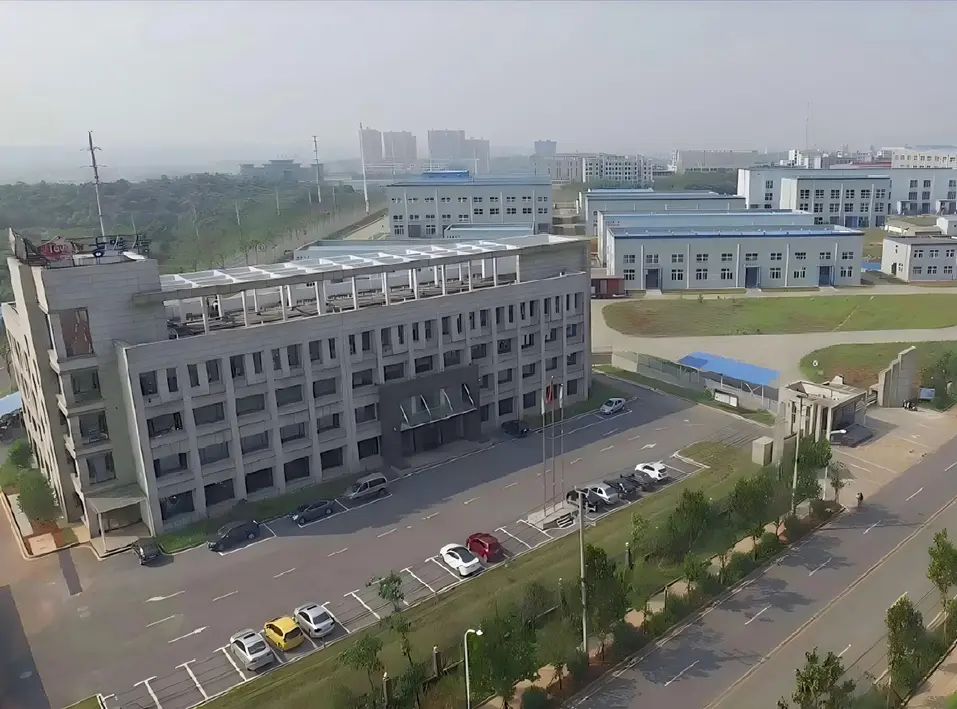
Operating from our sprawling manufacturing base in the Ningxiang National Economic and Technological Development Zone, Hunan, China, Toyal JWX synthesizes nearly three decades of atomization mastery with world-class Japanese process governance from the Toyo Aluminium K.K. Group (acquired jointly with Shanghai Matsuo Co., Ltd. in December 2009).
From light-weighting electric vehicle powertrains to maximizing thermal dissipation in multi-chip semiconductor modules, advanced spherical metal powders solve fundamental thermal, structural, and chemical trade-offs.
High thermal dissipation demands in AI computing clusters, telecommunications infrastructure, and EV battery battery modules require thermal interface materials (TIMs) with superior filler loading. Uncoated and fabricated spherical aluminium powders offer exceptional thermal conductivity without precipitating unacceptable viscosity rises in silicone oils or epoxy carriers.
Our engineered multimodal distributions achieve filler loadings above 88 wt%, effectively bridging microscopic gaps and eliminating thermal resistance bottlenecks.
Aluminum silicon alloy powders (Al-Si systems) are vital components of brazing pastes used in manufacturing compact plate-and-fin heat exchangers, automotive radiators, and cabin HVAC condensers. Accurate stoichiometric silicon control ensures a sharply defined liquidus-solidus window for clean capillary action without joint erosion.
Controlled atomization suppresses surface oxide layers, ensuring rapid wetting and flux compatibility during continuous controlled-atmosphere brazing (CAB) lines.
AMMCs reinforced with silicon carbide (SiC), boron carbide (B4C), or ceramic micro-whiskers overcome the classic stiffness-to-weight paradox. Clean atomized spherical aluminium powder matrices guarantee homogeneous dispersion of reinforcing particulates during dry ball-milling and hot isostatic pressing (HIP).
Applications span brake rotors, aerospace brackets, electronic packaging modules with low coefficients of thermal expansion (CTE), and ballistic defense plating.
Aluminium powders are chemically active substances requiring rigorous global shipping oversight, certified inert packaging systems, and meticulous toxicological and flammability documentations.
Uncoated aluminium powders are strictly managed under UN1396 (Class 4.3: Substances which in contact with water emit flammable gases), while coated or passivated variants qualify under UN1309 (Class 4.1: Flammable solids).
Every shipment is dispatched in UN-certified steel drums with moisture-barrier vacuum linings, backfilled with ultra-pure dry nitrogen or argon to avoid oxidation or headspace humidity infiltration during oceanic transits.
Toyal JWX operations maintain strict compliance under independently audited systems: ISO 9001:2015 for comprehensive Quality Management and ISO 14001:2015 for Environmental Stewardship. We operate under a dedicated Safe Production License for energetic metal powder fabrication.
Every commercial production lot is supplied with comprehensive Certificates of Analysis (COA) containing laser particle diffraction curves, ICP compositional analysis, and tapped/apparent density certifications.
Leveraging Toyo Aluminium K.K. and Shanghai Matsuo strategic commercial pipelines, Toyal JWX supports dedicated procurement routes for major enterprises in Germany, France, Japan, South Korea, the United States, and Southeast Asia.
Our bilingual applications engineering team collaborates directly with additive machine operators and R&D metallurgy labs to tune layer thickness parameters, post-sinter thermal profiles, and material safety handling protocols.
The future of metal 3D printing demands beyond-standard alloys capable of overcoming micro-cracking, improving operating temperatures, and supporting circular industrial ecosystems.
Conventional wrought alloys like 6061 and 7075 are notoriously prone to hot-cracking during rapid solidification in laser powder bed fusion. Toyal JWX is pioneering in-situ micro-alloying and surface inoculant nucleation routes that eliminate solidification cracking.
This allows automotive chassis designers and aerospace stress engineers to print ultra-light structural frames yielding yield strengths exceeding 450 MPa with excellent ductility.
Economic series additive manufacturing requires powder recyclability across 15+ re-screening cycles without oxygen escalation or particle degradation. Toyal JWX powders incorporate stabilized native nanometer oxide passivation skins that arrest moisture absorption during powder sieving.
Industrial trials reveal negligible oxygen growth per cycle, driving down the total cost of ownership (TCO) in serial automotive and commercial component builds.
Global tier-one aerospace and automotive procurement mandates verifiable low-carbon supply chains. By integrating high-purity recycled aluminum master melts with zero-carbon hydroelectric and photovoltaic powered induction furnaces, Toyal JWX continues to lower the embodied carbon footprint per metric ton of virgin atomized powder.
This supports our global partners in achieving aggressive SBTi and ESG targets throughout long-term serial platform contracts.
Clear, unambiguous answers addressing rheological performance, customized chemistry, dangerous goods shipping, and global partnership criteria.
Select a formulation below to review complete material specifications, chemical compositions, and procurement guidelines with our application engineering group.










