Affordable additive manufacturing equipment depends entirely on tight particle sphericity, high tap density, and uniform flowability. Explore our ISO 9001:2015 certified atomized aluminium and alloy series optimized for industrial LPBF, MIM, and thermal consolidation.

Engineered for high-reflectivity laser processing, electronic pastes, and sputtering targets requiring minimal trace interstitials.
View Product Specs
Formulated for press-and-sinter production cycles, balancing green strength with high sintered mechanical tensile density.
View Product Specs
Optimized AlSi10Mg spherical powders specifically calibrated for commercial and open-parameter additive printing platforms.
View Product Specs
Designed for ultra-high loading in TIM gap pads, thermally conductive silicones, and structural potting formulations.
View Product Specs
Engineered surface treatments enabling exceptional rheological dispersibility and enhanced compatibility in polymer matrixes.
View Product Specs
High-integrity base matrix powder for blending with SiC, B4C, and ceramic particles in lightweight automotive structures.
View Product Specs
Sub-micron to fine micro-spherical distributions providing superior debinding and high final sintering relative density.
View Product Specs
Tailored chemistry and low oxygen pick-up ensuring flawless mechanical sintering and maximum thermal dissipation.
View Product SpecsIn advanced industrial manufacturing, the phrase "cheap additive manufacturing machines" has evolved from low-end desktop hobbyist kits to high-efficiency, cost-optimized production systems designed for low Total Cost of Ownership (TCO), open material architectures, and repeatable metallurgy.
For more than a decade, laser powder bed fusion (PBF-LB/M) and direct metal printing machines were gatekept by multi-million-dollar acquisition barriers and closed material monopolies. Industrial procurement directors faced inflated equipment markups coupled with locked-in proprietary material cartridges priced up to 400% above raw market value.
The contemporary wave of cost-effective industrial AM machinery disrupts this model. Global exporters now deliver robust, multi-laser platforms engineered with open parameter databases. These systems allow production facilities to directly source certified gas-atomized aluminium alloys and spherical powders from specialized metallurgical pioneers such as Toyal JWX (Hunan Ningxiang JiWeiXin Metal Powder Co., Ltd.).
By decoupling machine hardware investments from mandatory powder contracts, global enterprises achieve up to a 62% reduction in part manufacturing costs without sacrificing structural integrity, ASTM compliance, or tensile fatigue thresholds.
A granular engineering and procurement breakdown comparing closed proprietary AM platforms with high-efficiency, cost-optimized AM machine suppliers backed by open feedstock integration.
| Evaluation Parameter | Legacy Proprietary AM Systems | Cost-Effective Open AM Machines | Procurement Advantage & Impact |
|---|---|---|---|
| Initial Machine CapEx | $750,000 – $1,400,000 USD per unit | $140,000 – $320,000 USD per unit | Up to 70% CapEx Savings Allows multi-machine scaling. |
| Feedstock Sourcing Policy | Locked RFID tag cartridges; closed parameters | 100% Open Parameter Control; direct mill sourcing | Open Sourcing Direct procurement from powder makers like Toyal JWX. |
| Powder Price per Kg (AlSi10Mg) | $95 – $160 / kg (Branded markups) | $22 – $38 / kg (Direct bulk atomization) | Over 65% Material Savings Drastically lowers serial part costs. |
| Optical Subsystem & Laser | Single 400W – 500W Fiber Laser | Dual or Quad 500W – 1000W Fiber Lasers | High Productivity Higher volumetric build rate (cm³/h). |
| Inert Gas Consumption (Ar/N2) | High purge loss, standard recirculation | Closed-loop laminar gas recycling with O2 < 50 ppm | Resource Optimization Cuts shielding gas expenditure by 40%. |
| Maintenance & Annual Spares | $40,000 – $75,000 / year mandatory SLA | Standardized modular galvo / recoater components | Rapid Field Repair Off-the-shelf industrial automation parts. |
Across North America, the European Union, and the Asia-Pacific region, procurement executives are facing intense margin pressure. Sourcing cheap additive manufacturing machines is no longer a compromise—it is an aggressive industrial strategy to secure competitive advantages.
Flight-weight brackets, internal fuel manifolds, and structural heat shields require lightweight aluminium alloys such as AlSi10Mg and high-strength Al-Mg-Sc-Zr formulations. High machine depreciation costs previously restricted additive manufacturing to low-rate initial prototyping.
As electric vehicles accelerate power-dense inverter and battery pack integration, thermal dissipation components require complex, organic fluid channels that conventional CNC milling or high-pressure die casting cannot realize.
Power semiconductors, radar systems, and data center cooling assemblies require ultra-high thermal dissipation. Specialized thermal interface materials (TIMs) and 3D printed heat sinks depend directly on advanced materials.
A cost-effective additive manufacturing installation cannot operate in a vacuum. True enterprise productivity demands an integrated solution linking machine stability, powder flow physics, and downstream thermal post-processing.
Budget-friendly additive systems achieve high-tier performance by adopting industrial fiber lasers (such as IPG or Raycus) paired with digital dynamic galvo scan-heads. Maintaining a spot diameter between 60 – 80 μm ensures sharp melt pool boundaries, mitigating satellite spatter and residual stress defects.
Even the most expensive machine will fail if the feedstock contains irregular morphology, satellites, or internal porosity. Our specialized inert gas atomization processes guarantee spherical particle geometries with Hall flow rates under 25 s/50g, ensuring reliable layer spreading down to 20 μm layer thicknesses.
Aluminium powders exhibit rapid pyrophoric tendencies and oxygen affinity. Advanced macro installations implement sealed glovebox transfer mechanisms, automated ultrasonic inert gas sieves, and closed-loop filtration, allowing powder to be safely recycled over 15 to 25 cycles without chemical degradation.
Combining the metallurgical legacy of Toyo Aluminium K.K. Group with Hunan Ningxiang JiWeiXin Metal Powder Co., Ltd. (Toyal JWX) to deliver certified, trace-audited advanced manufacturing supply chains.
Every atomization batch is manufactured under documented Japanese process control systems. We issue comprehensive Certificates of Analysis (COA) specifying laser diffraction particle size distributions (D10, D50, D90), tap density, chemical assays (ICP-OES), and oxygen/nitrogen interstitial levels.
As metallic powders are regulated hazardous materials, compliance is vital. Uncoated aluminium powders are certified under UN1396 (Class 4.3 Water-reactive solids), while coated and surface-treated grades conform to UN1309 (Class 4.1 Flammable solids). We maintain full IMDG, IATA, and DOT certifications.
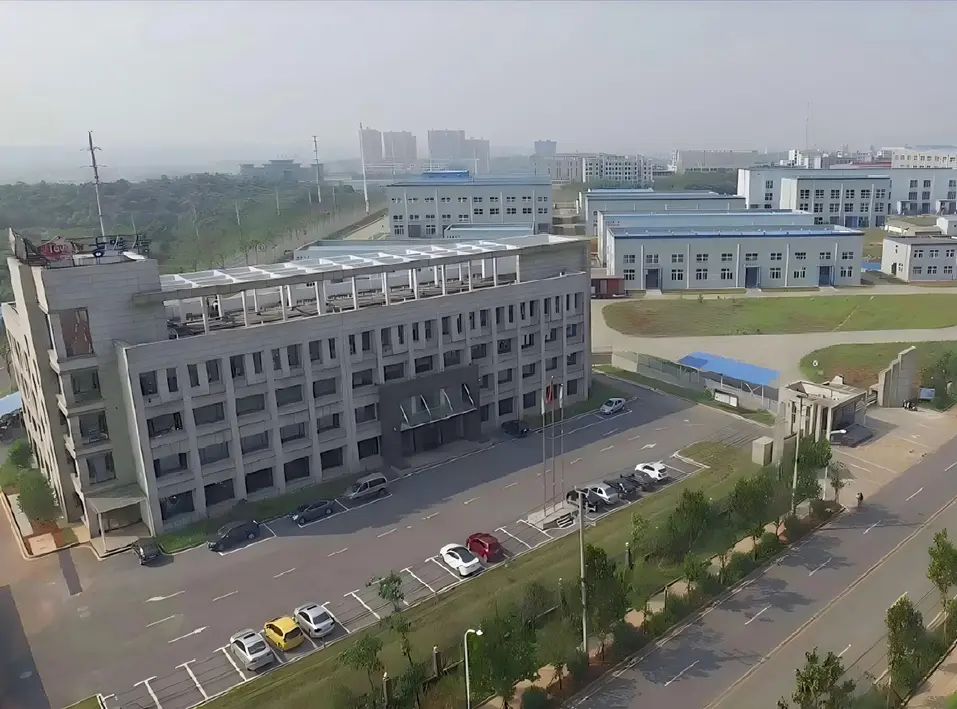
From our manufacturing hub in the Ningxiang National Economic and Technological Development Zone in Hunan, China, our supply chain supports partners across Europe, Southeast Asia, North America, and South America with multi-lingual engineering support in English, Chinese, and Japanese.
Strategic directions defining the next 3 to 7 years in cost-effective metal additive manufacturing hardware, beam delivery innovations, and custom alloy designs.
Widespread transition of mid-cost LPBF machines from single 500W configurations to synchronized quad-laser systems. Advanced stitching algorithms eliminate overlap micro-cracks, delivering build speeds beyond 120 cm³/h without machine price escalation.
Aluminium and copper alloys exhibit high optical reflectivity (>90%) in standard infrared (1064 nm) wavelengths. Integration of 515 nm green and 450 nm blue lasers into industrial hardware will lower required laser power, virtually eliminate keyhole spatter, and enable crack-free printing of 6xxx and 7xxx series high-strength aeronautical alloys.
Affordable binder jetting printers combined with high-volume sintering furnaces will achieve true automotive-scale economies. Fine gas-atomized aluminium alloy powders with customized nano-coatings will overcome traditional aluminum oxide sintering barriers, unlocking parts at forging-level cost.
Select the optimal atomized composition, grain size distribution, and packaging configuration. Direct factory export backed by Toyal JWX technical consulting.
99.9%+ purity atomized powders tailored for microelectronic targets, advanced optics, and specialized chemical reactors.
Download Full Datasheet
Custom elemental and pre-alloyed blends engineered for high dimensional repeatability in sintered automotive components.
Download Full Datasheet
Spherical AlSi10Mg, AlSi7Mg, and custom scalable grades showing zero satellite clustering and exceptional packing flow.
Download Full Datasheet
Optimized multimodal particle size distribution maximizing volume filler ratios without causing dispensing pump clogging.
Download Full Datasheet
Functional silane and polymer coatings protecting the aluminium surface against environmental hydrolytic oxidation.
Download Full Datasheet
Exceptional ceramic wetting characteristics delivering uniform dispersion of SiC/Al2O3 reinforcing particulates.
Download Full Datasheet
Strictly controlled fine particle cut (D50: 8–14 μm) for high-binder loading and rapid solvent debinding profiles.
Download Full Datasheet
Precisely controlled eutectic Al-Si compositions for flux-free brazing of automotive radiators and industrial heat exchangers.
Download Full DatasheetAddressing common technical and commercial queries regarding cheap additive manufacturing machinery, open parameter configuration, powder handling safety, and international export protocols.
No. When purchasing an industrial-grade machine from verified export suppliers, "cheap" refers to the elimination of proprietary software licensing fees, open material architectures, and efficient manufacturing scale. As long as the machine employs reputable fiber laser optics, digital galvanometer scanners, and high-purity inert gas shielding (argon or nitrogen with O2 < 100 ppm), structural metallurgy depends primarily on feedstock quality. Using highly spherical, low-oxygen atomized powder from certified producers like Toyal JWX achieves full part density (>99.7%) and ASTM-compliant mechanical tensile properties identical to legacy million-dollar machines.
Yes. Different additive machines employ different recoating mechanisms—such as soft silicone blades, hard steel scrapers, or counter-rotating rollers. We tailor the particle size distribution (for example, 15–53 μm for standard LPBF, 20–63 μm for high-speed multi-laser builds, or sub-25 μm for MIM and binder jetting). Custom D10, D50, and D90 parameters can be precisely air-classified at our Ningxiang facility to ensure ideal powder spreading without scraping resistance.
Spherical uncoated powder provides high metallic purity, superior electrical/thermal conductivity, and uninhibited surface meltability for laser powder bed fusion (LPBF), press-and-sinter powder metallurgy (PM), and metal matrix composites (AMMC). Coated or surface-treated aluminium powder incorporates an engineered organic or inorganic boundary layer. This surface modification enhances chemical coupling with polymer matrices (such as silicones, epoxies, or polyurethanes) in thermal interface gap pads and greases while providing increased oxidation resistance in corrosive storage environments.
Metallic aluminium powder is classified as a regulated Dangerous Good. Uncoated powders are categorized as UN1396 (Hazard Class 4.3, Dangerous When Wet), while coated powders are generally UN1309 (Hazard Class 4.1, Flammable Solids). We ship products in hermetically sealed UN-approved steel drums with vacuum-sealed antistatic inner liners, backfilled with inert argon gas to eliminate moisture. All shipments are accompanied by bilingual Safety Data Sheets (SDS), Certificates of Analysis (COA), and complete maritime dangerous goods manifests (IMDG/IATA compliant).
Founded in 1997 as Hunan Ningxiang JiWeiXin Metal Powder Co., Ltd., the company became a member of the Toyo Aluminium K.K. Group in December 2009 following a strategic acquisition alongside Shanghai Matsuo Co., Ltd. This corporate integration combines Japanese metallurgical engineering, stringent 5S shop-floor process control, and ISO 9001/14001 certified manufacturing with a modern 10,000-tonne annual capacity located in Ningxiang National Economic and Technological Development Zone, Hunan Province, China.

