How to Choose Aluminum Pigment Powder for Your Application?

Time:2026-11-04 Author:Madeline
0%

Choosing Aluminum Pigment Powder is not just a matter of picking the brightest sample. The right grade depends on the surface, coating system, application method, and finish you need. A pigment that looks crisp on a smooth panel may appear uneven on a textured part. Small differences matter.

This guide explains the practical factors to compare, including particle size, particle shape, brightness, hiding power, and compatibility with the binder. It also covers how mixing and application can influence the final appearance. For example, spraying a metallic coating may produce a different visual effect from applying it by brush. The product data sheet and supplier’s technical guidance are useful starting points, but they cannot predict every result on your production line.

Test before scaling. Prepare samples using your actual substrate and process, then inspect them under consistent lighting. Check for settling, coverage, color consistency, and the finish after drying or curing. Keep clear records of the grade, mixing conditions, and application settings. It sounds obvious, yet these details are easy to miss when teams compare samples quickly. A small trial may reveal a mismatch before it becomes an expensive batch issue.

No single grade suits every application. Careful testing and clear requirements make selection more reliable, even when the first choice needs revision.
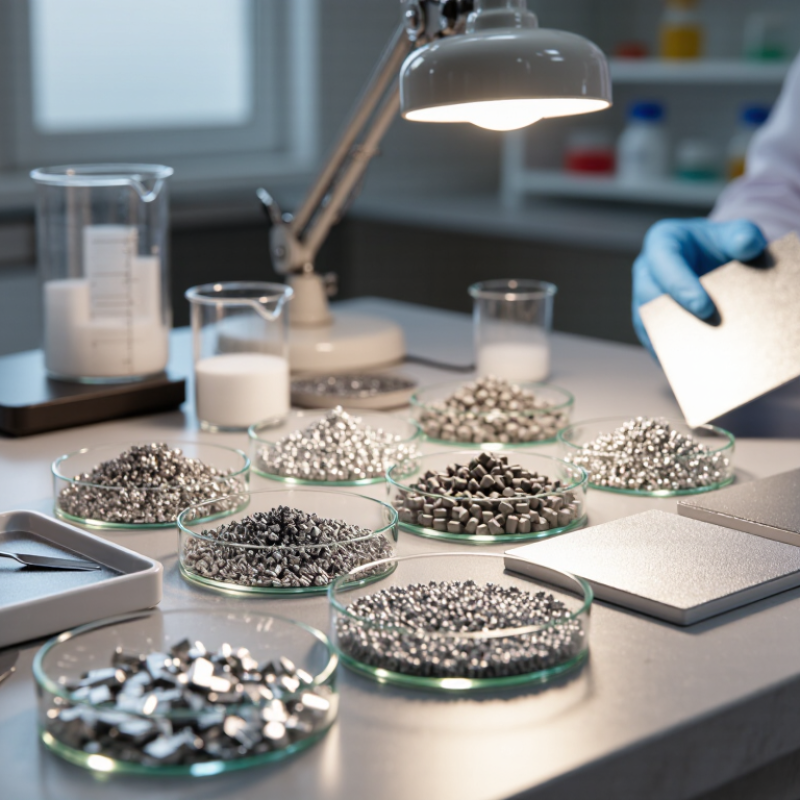
How to Choose Aluminum Pigment Powder for Your Application?

Define the Application’s Performance and Processing Requirements

Define what the coating must do before choosing aluminum pigment powder. Is the priority metallic sparkle, a smooth silver appearance, corrosion resistance, or thermal reflection? These targets can conflict. A coarse flake may create stronger sparkle, yet look uneven on a curved part. A finer grade can improve smoothness but may reduce visual depth. Small details matter. Record the substrate, film thickness, application method, cure schedule, and exposure conditions. Also specify whether the finish must tolerate abrasion, moisture, or repeated cleaning.

Translate those needs into measurable tests. ASTM D523 and ISO 2813 measure gloss at 20°, 60°, and 85°; the selected angle should match the finish’s gloss range. For adhesion, ISO 2409 provides a cross-cut classification from 0 to 5, where 0 indicates the best result. Test panels should use the real substrate and intended binder, not just a convenient laboratory surface. Check pigment dispersion, spray-gun passage, settling, and film appearance after curing. A small trial batch can reveal agglomerates or nozzle blockage before production. Results may vary with resin and process conditions, so one test rarely settles the choice. That is easy to overlook. Keep application records, compare samples under consistent lighting, and reassess the specification when the production line changes.

Compare Aluminum Pigment Forms and Particle Characteristics

Aluminum pigment is available as dry powder, paste, and other prepared forms. Dry powder can suit processes that already have reliable dispersion equipment. Paste is often easier to incorporate and can reduce airborne dust, but its carrier must match the coating system. A small test batch helps reveal compatibility problems.

Particle shape and size change the finish. Fine flakes can create a smooth, even metallic appearance on a flat panel. Larger flakes tend to show more sparkle and texture, especially under angled light. The trade-off is real. Coarse particles may look uneven in thin films, while very fine particles can mute the effect you wanted.

Leafing pigments rise toward the coating surface, creating a bright metallic layer. Non-leafing particles remain distributed through the film, which can support more uniform color and easier overcoating. Neither type is automatically better. Compare the intended appearance, film thickness, and application method. Also review the supplier’s technical data and safety guidance, then check dispersion under your actual mixing conditions. One detail is easy to miss: a sample may look excellent in a jar but behave differently on a sprayed panel.

How to Choose Aluminum Pigment Powder for Your Application? - Compare Aluminum Pigment Forms and Particle Characteristics

Form or characteristic Typical particle features Appearance and performance Common application fit Selection considerations
Leafing aluminum flakes Flakes migrate toward the coating surface during drying; grades are commonly supplied as flakes in a carrier or as powder. Can form a bright, relatively continuous metallic surface with strong surface reflectivity. Decorative coatings and applications where a bright metallic finish and surface coverage are priorities. May have limited intercoat adhesion or overcoatability. Test compatibility with the binder, additives, and finishing layers.
Non-leafing aluminum flakes Flakes remain more evenly distributed through the coating film rather than concentrating at the surface. Often provide a more uniform, durable metallic effect and better suitability for overcoating than leafing grades. Industrial and automotive coatings, plastics coatings, and multilayer coating systems. Brightness depends on flake orientation, film thickness, dispersion, and coating formulation.
Fine flakes Smaller lateral flake dimensions generally create a smoother visual texture; the exact size distribution varies by grade. Can give a finer, more uniform metallic appearance, though the result depends on flake thickness and orientation. Thin films, detailed parts, and applications requiring a relatively smooth metallic effect. Check particle-size distribution and the coating system’s ability to disperse the flakes without damaging them.
Coarse flakes Larger lateral dimensions are more visually prominent in the finished film. Can create a stronger sparkle or more textured metallic effect; large flakes may make surface irregularities more noticeable. Decorative finishes and applications designed for a pronounced metallic or sparkle effect. Confirm that the flake size is compatible with film thickness, spray equipment, nozzle openings, and surface-finish requirements.
Flake particle shape and aspect ratio Aluminum effect pigments are typically thin, plate-like particles. Aspect ratio describes lateral size relative to thickness. Flake orientation and overlap influence reflectivity, hiding, and the perceived smoothness of the metallic effect. Relevant to nearly all metallic coatings and printing applications. Do not compare grades by nominal size alone; review the supplier’s particle-size data and evaluate the pigment in the intended formulation.
Surface treatment or coating Some grades have surface treatments intended to improve compatibility, handling, or resistance to moisture and chemicals. May affect dispersion, stability, and coating performance; the effects depend on the treatment and binder. Water-based systems, chemically demanding environments, and formulations with specific compatibility needs. Verify the treatment’s suitability for the resin, solvent or water phase, pH, and intended end-use conditions.
Aluminum flake powder versus paste Powder is a dry product; paste contains flakes dispersed in a liquid carrier. Both may be based on flake pigments. Powder can offer convenient dry handling where the process is designed for it; paste can simplify incorporation and reduce airborne dust during handling. Powder: compatible dry-blend or manufacturing processes. Paste: many liquid coating formulations. Compare carrier compatibility, active aluminum content, storage requirements, incorporation method, and applicable safety data.
Atomized aluminum powder Generally consists of more equiaxed or irregular particles rather than the thin flakes used for metallic-effect pigments. Does not typically produce the same reflective flake effect as aluminum effect pigments. Applications that require aluminum powder as a material, rather than a conventional metallic-flake appearance. Confirm particle morphology and intended use; do not treat atomized powder and aluminum flake pigment as interchangeable.

Practical note: Particle-size ranges and visual results vary by grade and test method. Review the technical data sheet and safety data sheet, and test the pigment in the intended binder, application process, and film thickness before production.

Match Pigment Appearance to the Desired Surface Effect

Choose the surface effect before comparing aluminum pigment grades. Aluminum flakes can create crisp sparkle, a soft satin glow, or a smoother metallic finish. Particle size and shape influence the result: coarser flakes often show stronger flashes, while finer particles usually create a more even appearance. Not always, though. Flake orientation, coating thickness, and the binder can shift the effect.

For a bright, reflective finish, look for fine pigment that can align evenly in the coating. A smooth substrate and controlled application help reduce visible texture. For a more sparkling surface, a coarser grade may suit decorative panels or molded parts. Check whether the pigment is designed for the coating system, since leafing behavior can affect brightness, adhesion, and surface feel. A product description alone cannot predict the finished look.

Make drawdowns on the actual substrate, using the intended coating thickness and application method. View them under both direct light and softer indoor lighting; a sample that looks lively in a booth may appear dull in a room. Test both. Record the grade, mixing conditions, and film thickness so comparisons stay useful. Even careful testing has limits: production equipment and operator technique can change flake alignment, so allow for small visual differences.

Check Compatibility with the Coating or Material System

Choosing aluminum pigment powder starts with the coating system, not the desired sparkle. Check the binder, solvent, pH, and curing temperature against the pigment’s surface treatment. A pigment designed for solvent-borne acrylic may behave differently in waterborne epoxy. In alkaline water, untreated aluminum can react and release hydrogen, causing bubbles or storage pressure. Small details matter.

Ask the supplier for compatibility data specific to your resin and processing conditions. Then make a bench trial using the actual mixing order, shear, and film thickness. Watch for flocculation, settling, loss of metallic orientation, and changes in gloss after curing. Keep the test small. A quick jar check helps, but it cannot predict every production condition. I have seen promising samples change once the full formulation was mixed; that is an easy result to overlook.

Grand View Research’s 2024 Paints and Coatings Market report valued the global market at USD 179.98 billion in 2023. That broad figure is not a compatibility rule, but it reflects the many coating systems pigment suppliers must serve. Request data for your exact system, including storage stability and adhesion results. Check the finished film, too: a pigment can disperse well yet weaken adhesion or look uneven. A small test can still miss slow settling, so review the sample again after storage.

How to Choose Aluminum Pigment Powder for Your Application?

Check compatibility with the coating or material system before selecting a pigment grade.

The bars show a qualitative screening priority, not measured compatibility or a pass/fail rating. Waterborne systems need particular attention to moisture reactivity; solventborne systems require a suitable solvent and binder match. For UV-curable and powder coatings, check dispersion and process conditions, including cure or heat exposure. Confirm the specific pigment’s surface treatment and technical guidance, then test it in the complete formulation.

Test Candidate Grades Under Actual Application Conditions

How to Choose Aluminum Pigment Powder for Your Application?

Test Candidate Grades Under Actual Application Conditions

A powder that looks bright in a sample jar may behave differently in a finished coating. Test candidate grades using the same binder, mixing equipment, film thickness, and curing conditions planned for production. Record how easily each grade disperses, whether the metallic effect stays even, and how the surface looks under direct and angled light. Small differences matter.

Include the application’s real stresses. For an exterior coating, check appearance after weathering exposure; for molded parts, inspect the surface after the actual forming cycle. Compare more than brightness. Note hiding power, settling, adhesion, and any change in color or sparkle. Keep a control sample and repeat the test if results vary. That sounds obvious. It is easy to overlook one variable, especially when schedules are tight.

Tips: Label every sample with its grade and test conditions. Change one variable at a time. Use the production substrate, not just a convenient test card. If a result seems unusually good, repeat it before making a selection. A test panel cannot predict every production issue, but it can reveal problems early.

FAQS

How does particle size affect the metallic appearance?

Coarser flakes often create stronger flashes on decorative panels. Finer flakes usually look smoother and more even. Not always.

What should I test for a bright, reflective finish?

Try a fine grade on a smooth sample panel. Keep coating thickness and application method consistent. Small differences matter.

How can I compare sparkle and satin effects?

Make drawdowns on the actual surface. View them in direct light and soft indoor lighting. Both views count.

Why does a sample look different from the finished product?

Flake alignment can shift with coating thickness, binder, equipment, or operator technique. A booth sample may look dull indoors. It happens.

How do I check pigment compatibility with my coating?

Confirm suitability for the binder, solvent, pH, and curing temperature. Ask for data matching your specific formulation. General claims are not enough.

What should I watch for during a small mixing trial?

Use the intended mixing order and shear. Check for settling, clumping, uneven metallic appearance, and gloss changes after curing. Keep notes.

Is a quick jar test enough to confirm performance?

No. A jar test is useful, but it may miss changes during production or storage. Check the sample again later.

What details should I record when comparing grades?

Record the grade, mixing conditions, substrate, and film thickness. Also note lighting and application method. I would not trust one glossy sample.

Conclusion

Choosing Aluminum Pigment Powder begins with a clear understanding of the application’s performance and processing requirements, such as the desired durability, coverage, handling, and production method. Compare available pigment forms and particle characteristics to find an option that suits the material and equipment. Particle size and shape can influence both processing behavior and the final visual result.

Next, define the intended surface effect, from a subtle metallic appearance to a brighter, more reflective finish, and check that the pigment is compatible with the coating or material system. Since results can vary with formulation and application conditions, evaluate promising grades in the actual process whenever possible. Testing helps reveal differences in appearance, dispersion, and overall performance before a choice is finalized. By considering these factors together, you can select a pigment that meets practical production needs while delivering the desired finish.


Madeline

Madeline

Madeline is a dedicated marketing professional with a wealth of expertise in our company's core offerings. With a keen understanding of the industry, she brings a unique perspective to her role, consistently delivering high-quality content that highlights the superior aspects of our products. As......
